When Should You Repair vs Replace a Cracked Windshield?
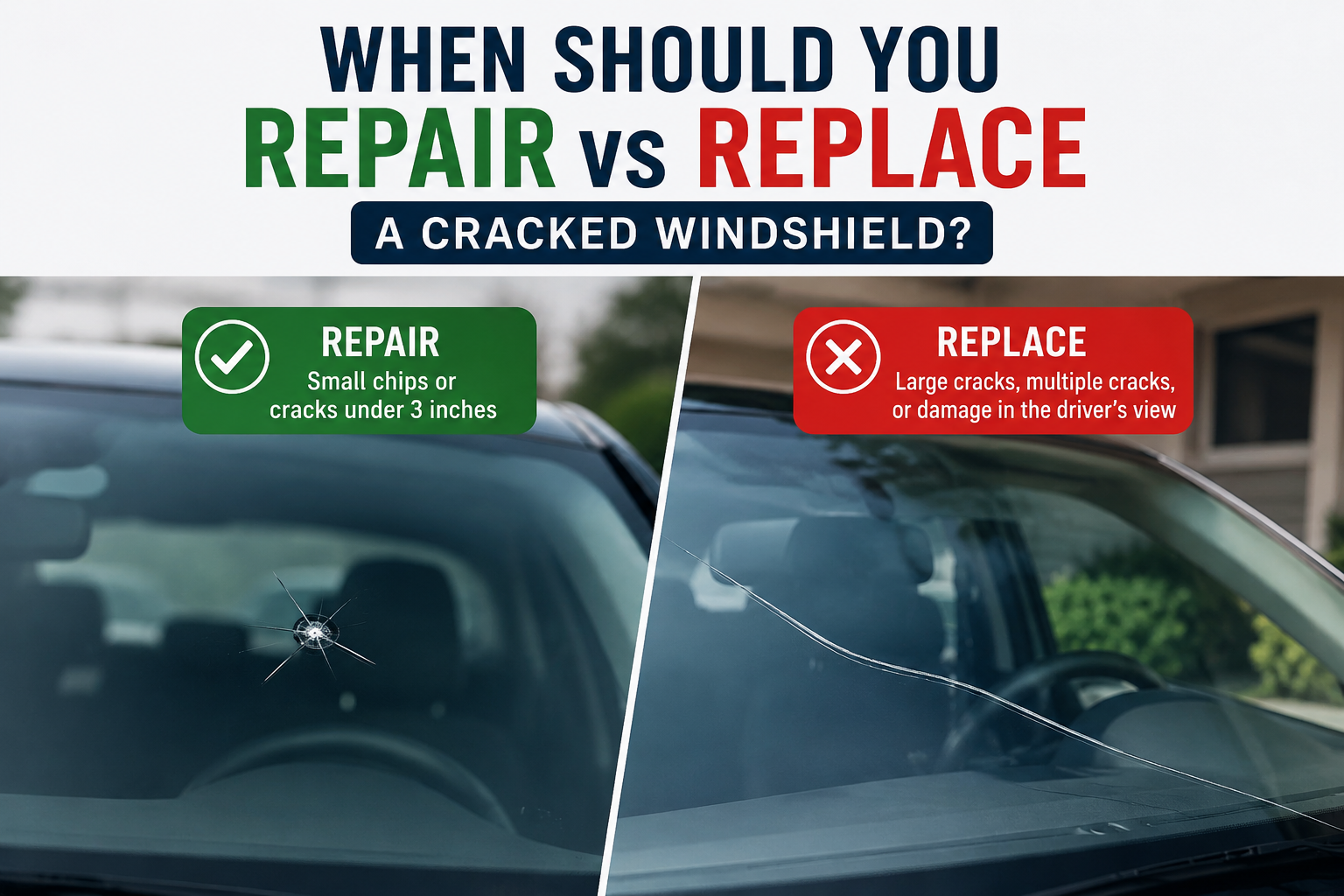
You should repair a cracked windshield when the damage is small, shallow, away from the edges, and outside the driver’s line of sight, and replace it when the damage is large, reaches an edge, sits directly in your view, or appears in several places. Roughly 80 to 85% of windshield chips and small cracks are repairable when they’re caught early, so acting fast often saves you a full replacement. At Jacob’s Low Price Auto Glass in Dallas, we give you an honest answer on which path is right rather than pushing the more expensive option.
If you’re staring at fresh damage and unsure what to do, this chip vs crack windshield repair guide walks through the exact factors that decide it: size, location, depth, and how many spots of damage there are. We’ve been serving Dallas, Richardson, and Lewisville since 2000, and these are the same criteria our technicians use every day.
The single biggest variable you control is timing. A small chip caught quickly is usually a quick fix, while the same chip ignored for a few weeks in Texas heat can spread into a crack that forces a replacement.
Most Windshield Chips Are Repairable If You Act Quickly
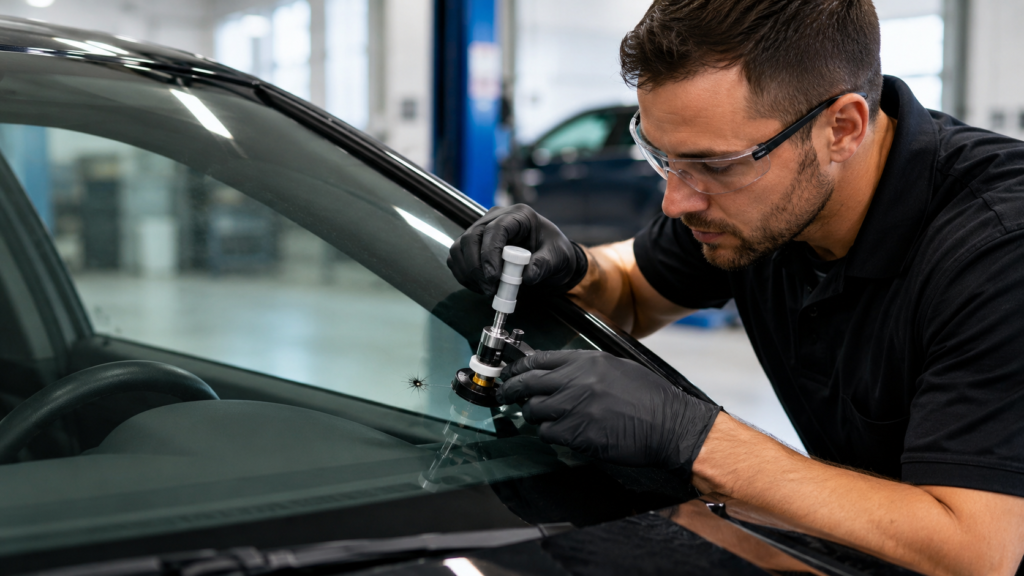
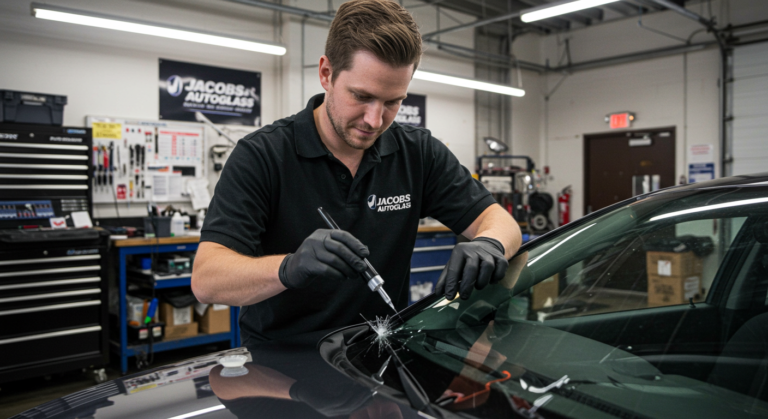
The majority of windshield chips and short cracks can be repaired, especially when you address them within the first day or two before they spread. Repair works by injecting resin into the damage to restore strength and clarity, and it’s faster, cheaper, and more eco-friendly than replacing the whole windshield.
Damage is generally repairable when it meets these conditions:
- Size: A chip smaller than a quarter, roughly one inch across, or a crack under about three inches.
- Location: Away from the edges of the windshield and outside the driver’s direct line of sight.
- Depth: Damage that has only penetrated the outer layer of glass, not both layers.
- Number: One to three small, isolated chips rather than widespread damage.
Common repairable damage includes bullseye chips, star breaks, half-moon chips, and combination chips, as long as they fall within those size limits. The sooner you have it looked at, the better the odds that a simple repair is all you’ll need.
Certain Damage Always Requires a Full Replacement
Some windshield damage cannot be safely repaired and calls for a full replacement regardless of how small it looks. This is because the windshield is a structural part of your vehicle, and compromised glass can’t be patched back to full strength.
You should plan on replacement when the windshield has any of the following:
- Cracks or chips near the edge or corner, which undermine the glass’s structural support.
- Damage directly in the driver’s line of sight, since even a clean repair can leave a faint distortion.
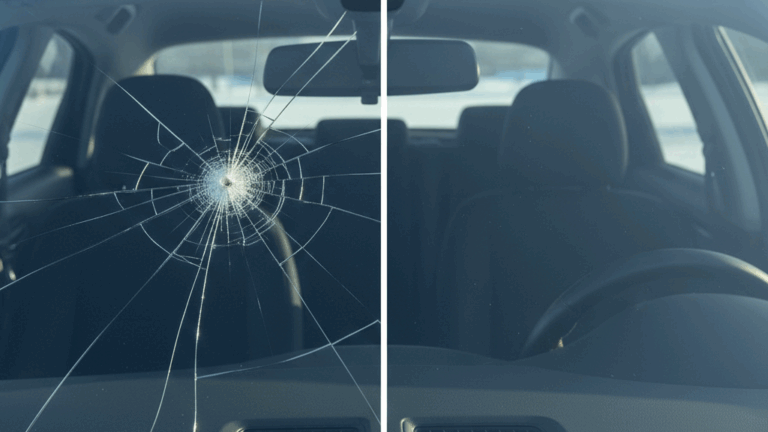
- Cracks that radiate in several directions from a single impact point.
- More than two or three separate chips or cracks.
- Cracks longer than about three to six inches.
- Damage that has penetrated both layers of the laminated glass.
Even profit-driven insurance companies often insist on replacement in these cases, because the cost of a new windshield is far cheaper than the risk of failure in an accident. When the damage crosses these lines, replacement is the safe call.
How Do Size and Location Decide Repair vs. Replacement?
Size and location together are the two factors that most often decide whether you repair or replace a windshield, and location matters even more than size. A tiny chip in the wrong spot can require replacement, while a slightly larger chip in a safe area may be an easy repair. Here’s how the main factors line up:
| Damage Factor | Likely Repairable | Likely Needs Replacement |
|---|---|---|
| Chip size | Smaller than a quarter (~1 inch) | Larger than a quarter |
| Crack length | Under about 3 inches | Longer than 3 to 6 inches |
| Location | Away from edges and driver’s view | Near an edge or in the driver’s sight line |
| Number of spots | 1 to 3 isolated chips | More than 2 to 3, or radiating cracks |
| Depth | Outer layer only | Penetrates both layers |
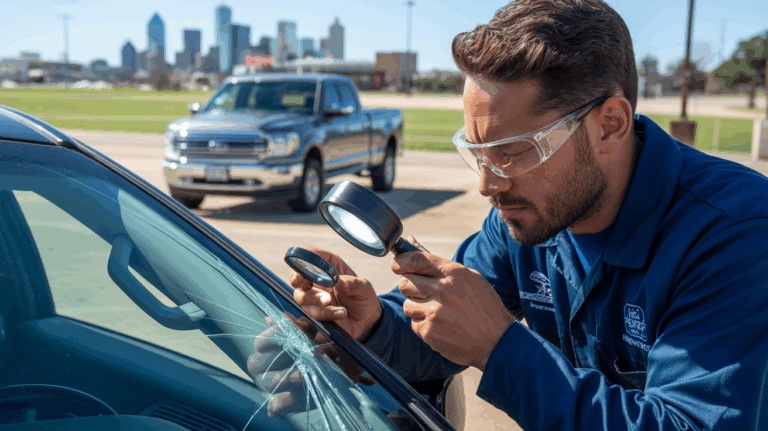
If your damage falls into the repairable column across the board, a quick fix is likely. If it lands in the replacement column on even one of the safety-critical factors, like edge damage or line-of-sight position, replacement is usually the right move. When you’re unsure, a quick professional assessment settles it.
Why Does a Cracked Windshield Affect My Safety?
A cracked windshield is a safety issue, not just a cosmetic one, because the glass is a load-bearing part of your vehicle’s structure. In a rollover, the windshield typically provides around half of the roof’s support strength, and your passenger airbag is designed to deflect off the windshield as it deploys. If the glass fails or pops out, you lose both protections.
There’s also the visibility factor. Damage in the driver’s direct line of sight can:
- Catch light and create glare or distortion that distracts you.
- Obstruct your view of the road, pedestrians, or other vehicles.
- Leave a faint mark even after repair, which is why replacement is preferred there.
This is why a small chip in front of the driver is often treated more seriously than a larger chip off to the side. Your clear, unobstructed view and the structural integrity of the glass both matter for staying safe on Dallas roads.
Acting Fast Keeps a Small Repair From Becoming a Full Replacement
Addressing windshield damage quickly is the most reliable way to keep a low-cost repair from turning into a much pricier replacement. A small chip can spread into a long crack overnight when temperatures swing, and Texas heat is especially hard on damaged glass when a hot windshield meets cold air conditioning.
Acting fast pays off in a few ways:
- Cost: A quick repair is a fraction of the cost of a full replacement.
- Repairability: Damage caught early stays within the repairable size range.
- Insurance: Many insurers cover chip repairs with little or no out-of-pocket cost, and Jacob’s works with all major insurance companies. In many cases, we can handle the work for less than your deductible.
Waiting rarely makes the problem cheaper. The moment you notice a chip, having it assessed is almost always the smart financial and safety decision.
Jacob’s Low Price Auto Glass Gives You an Honest Repair-or-Replace Answer in Dallas
Jacob’s Low Price Auto Glass has helped Dallas drivers make the repair-or-replace call honestly since 2000, with a focus on integrity rather than upselling. Located south of downtown on S Central Expy, we keep one of the largest in-shop glass inventories in the area, which means we can often handle same-day replacements and welcome walk-ins.
Here’s what working with us looks like:
- Honest assessments that tell you straight whether a repair will do or a replacement is needed.
- Mobile service across Dallas, Richardson, and Lewisville, coming to your home or office with the same quality as in-shop work.
- Factory-matched glass that preserves your tint, antennas, and defogger or defroster exactly as before.
- Insurance help with all major companies, often for less than your deductible.
- A lifetime warranty on our auto glass and windshield installation against water and air leakage.
Frequently Asked Questions About Windshield Repair vs. Replacement
How long do I have before a chip becomes unrepairable?
There’s no exact deadline, but the best results come from repairing damage within the first 48 hours. A chip can spread into a crack quickly, especially with Texas temperature swings, and once it grows beyond the repairable size or reaches an edge, replacement becomes necessary. The sooner you act, the better your odds of a simple repair.
Will a windshield repair be visible afterward?
A quality repair restores the structural integrity of the glass and greatly improves clarity, though it may leave a small, faint blemish at the original impact point. This is usually barely noticeable and well worth keeping your original windshield. Repairs in the driver’s direct line of sight are the exception, where even slight distortion is a reason to replace.
Is it safe to drive with a small chip?
A small chip that’s outside your line of sight and away from the edges may be safe to drive with briefly, but it shouldn’t be ignored. Vibration, temperature changes, and bumps can cause it to spread without warning. The safest approach is to have it assessed and repaired promptly before it turns into a larger problem.
Does insurance cover windshield repair?
Many insurance policies cover chip and crack repairs with little to no out-of-pocket cost, since insurers prefer an inexpensive repair over a costly replacement later. Jacob’s works with all major insurance companies to make the claim smooth. In many cases, we can complete the work for less than your deductible would cost.
Can a windshield repair be done at my home or office?
Yes. Jacob’s offers mobile service throughout Dallas, Richardson, and Lewisville, bringing the same quality materials and workmanship to your location. Quick-curing adhesives mean your vehicle is typically ready to drive about an hour after we finish, saving you the hassle of drop-off and pick-up.
The Bottom Line on Repairing vs. Replacing Your Windshield
Repair your windshield when the damage is small, shallow, off to the side, and out of your direct view, and replace it when the damage is large, reaches an edge, sits in your sight line, or shows up in multiple places. Because location and timing matter so much, the smartest move is always to have damage looked at quickly before it spreads.
If you’ve got a chip or crack and want a straight answer, the team at Jacob’s Low Price Auto Glass is ready to help, whether that’s a quick mobile repair in your driveway or a same-day replacement at our Dallas shop. Call us for a free quote and let’s keep you safely on the road.